MCN Seminar: Multidisciplinary (mission directed) research in nanotechnology at the University of Sydney
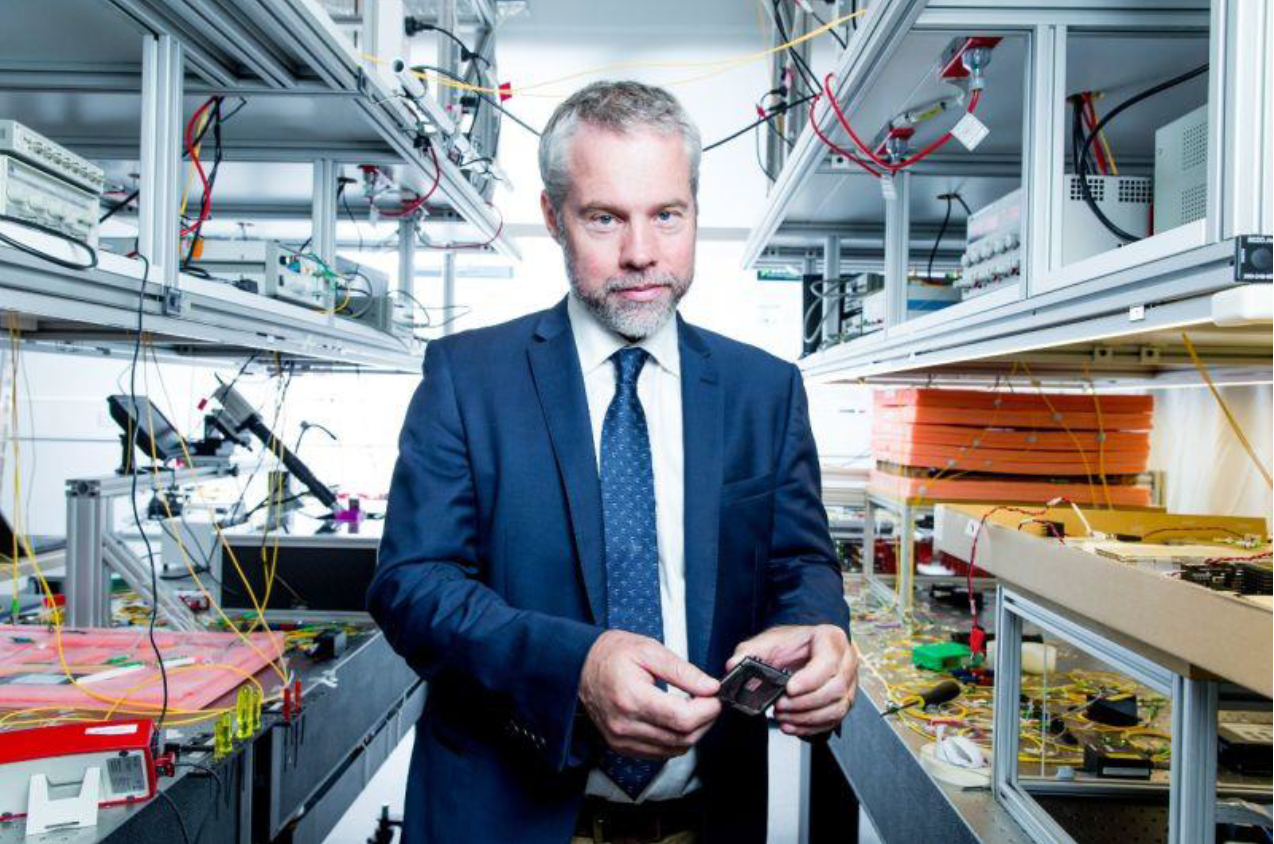
Sydney Nano is a multidisciplinary initiative at the University of Sydney headquartered in the state-of-the-art Sydney Nanoscience Hub. Professor Eggleton will introduce the Sydney Nano research framework, which emphasise collaborative mission directed projects that address major societal grand challenges with examples from the life sciences, and sustainability. In the second part of the presentation Professor Eggleton will review research from his research group on the topic of photonic sensor fusion, with emphasis on recent development of novel photonic radar sensors for vital sign detection.
Professor Eggleton is a Professor of Physics at the University of Sydney. He is the Director of the University of Sydney Nano Institute and co-Director of the NSW Smart Sensing Network (NSSN). Eggleton was founding Director of CUDOS, the ARC Centre of Excellence for Ultrahigh bandwidth Devices for Optical Systems and served as Director from 2003-2017 and of Sydney’s Institute of Photonics and Optical Science (IPOS), serving as Director from 2009-2018. He is a Fellow of the Australian Academy of Science, the Australian Academy of Engineering and Technology, the Optical Society of America (OSA), IEEE and SPIE. Eggleton received the 2020 W.H. (Beattie) Steel Medal which is the most prestigious award of the Australian and New Zealand Optical Society, for outstanding career contribution to the field of optics in Australia or New Zealand. His team won the 2020 Defence Science and Technology Eureka Prize for Outstanding Science in Safeguarding Australia. Eggleton was President of the Australian Optical Society (2008-2010), Editor-in-Chief for Optics Communications (2007-2015), served on the Board for IEEE Photonics Society (2015-2017) and is Editor-in-Chief for APL Photonics. Eggleton secured more than $65M in competitive research funding. Eggleton published 500 journal publications (24,000 citations, h-index of 81- Webofscience and 44,000 citations, h-number of 112 – google scholar).
11:00am, 27/09/2022
At the Melbourne Centre for Nanofabrication Boardroom
151 Wellington Road, Clayton, 3168
Or to attend via Zoom link: here
Meeting ID: 827 9337 9565 and passcode: 557617
Click here for more information
ANFF-SA Microengineering School
We’re very excited to announce that ANFF-SA’s Microengineering School program is now open for registration.
Ideal for people interested in engineering microscopic devices used in new world technologies, ANFF-SA’s FREE four-day program provides students, researchers, academics and industry with a fascinating introduction to the design and fabrication of microfluidic/electronic, MEMS, optical and sensing chips.
Delivered onsite at UniSA’s Future Industries Institute, in Mawson Lakes, (and online) ANFF-SA’s Microengineering School includes 8 x lectures, 8 x practicals and 7 x Insight sessions delivered by technical experts and industry leaders.
There are no pre-requisites for participating in the program which covers photolithography, design for photolithography, etching, PDMS devices, microelectrodes, characterisation techniques, simulation, electrical integration, and 3D printing.
– Learn about photolithography, design, etching, PDMS devices, microelectrodes, characterisation techniques, simulation, electrical integration & 3D printing
– Engage directly with industry leaders/technical experts
– Hands-on practicals in world-class cleanroom facilities
Register your onsite attendance * Note seats are limited – be quick!
Register your online participation
Download a copy of the program
For more information, please email Belinda.Turner@unisa.edu.au
ANFF-VIC/MCN Director receives 2022 Laureate Fellowship
 Congratulations to Professor Nicolas Voelcker who has recently been awarded one of the 2022 Australian Laureate Fellowships.
The Australian Laureate Fellowships scheme reflects the Australian Government’s commitment to excellence in research by supporting world-class researchers to conduct research in Australia.
Click here for official announcement
New capabilities commissioned and ready for use
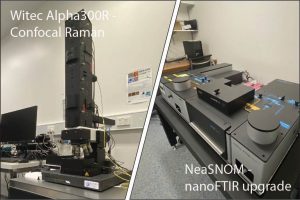
“The Australian Research Council (ARC) and a Monash University-led consortium have funded new infrastructure with advanced multi-functional 3D imaging capabilities, which will provide unprecedented capabilities to investigate the complex processes in electrical, photonic, optoelectronic, and energy devices in Australia.” -link to official press release here.
The investment was used to fund a pair of capabilities that are currently available for access and training. The capabilities are:
Witec Alpha300R Confocal Raman
- Confocal Raman Imaging at high speeds with unprecedented resolution and sensitivity
- Hyperspectral image generation, i.e., spectroscopic info in every pixel
- Large DOF allows 3D imaging and depth profiling
- Spectrum acquisition in one millisecond
- Non-destructive analysis with no staining or fixation of the sample required
- more info on this technique here
- neaSNOM microscope upgraded to allow for imaging and spectroscopy by addition of broadband IR laser and detector
- Allows the study of chemical, structural and electronic properties of a sample at a spatial resolution up to 10nm; 1000x improvement over conventional micro FT-IR
- Non-destructive measurement method is equally suited for organic and inorganic samples
- more info on this technique here
For training and/or more information on these new MCN capabilities, please contact our engineers by emailing mcn-enquiries@nanomelbourne.com
MCN Seminar: Multi-sector collaborations driving research translation
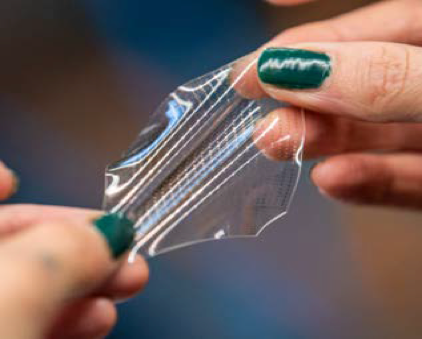
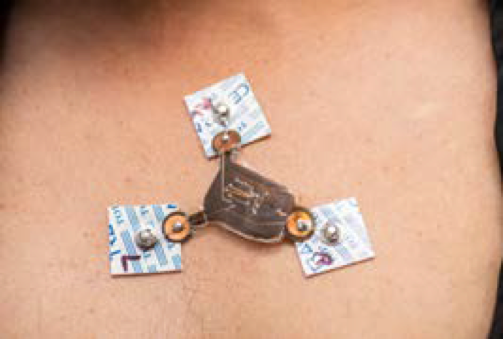
Imagine wearable sensors which you place on your skin – this band-aid like patch could measure your body parameters offering you a window to your health. Imagine nearable sensors embedded into a mattress cover which can non-invasively track a person’s presence, position, and posture in bed overnight in residential aged care facilities.
These nearable and wearable sensors are conformal, un-feelable and unbreakable. I will present the research which has lead to these technologies, the challenges overcome, and collaborative efforts with industry and design partners which is paving the path for their commercialisation.
Professor Madhu Bhaskaran is a multi-award winning electronics engineer and innovator. She co-leads the Functional Materials and Microsystems Research Group at RMIT University which she established in 2010. Madhu has been awarded the 2020 Frederick White Medal by the Australian Academy of Science, the 2018 Batterham Medal by ATSE, and the 2017 Australian Museum Macquarie University Eureka Prize for Outstanding Early Career Researcher. She is also node leader and Chief Investigator of the ARC Centre of Excellence for Transformative Meta-Optical Systems.
She is a migrant Australian and a passionate advocate for diversity, and is co-chair of Women in STEMM Australia and on the Advisory board for STEM Sisters.
11:00am, 09/06/2022
At the Melbourne Centre for Nanofabrication boardroom
151 Wellington Road, Clayton, 3168
Zoom link: here
Meeting ID: 867 9787 1037 and passcode: 609627
Click here for more information
MCN Seminar: s-SNOM technology for nanoscale analytics
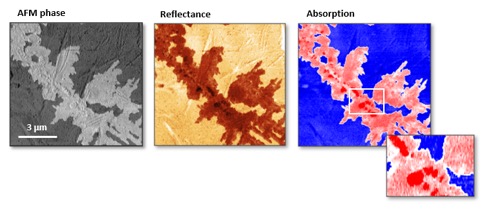
Figure above: Imaging of a 10 nm thin PEO monolayer at 1123 cm-1 (asy. C-O-C stretching) shows self-assembled nano-structures and areas of different material thickness. High contrast absorption images allow to clearly distinguish between mono- and bilayer film areas
Dr. Adrian Cernescu, a senior application engineer of Attocube systems AG, Munich, Germany, will be presenting a seminar and hands on demonstration on scattering-type Scanning Near-field Optical Microscopy (s-SNOM) on 8th April 2022.
The talk will focus on s-SNOM capabilities and different applications such as characterization of polymer blends or phase change polymers with nanometer-scale domains. Quantification of free-carrier concentration and carrier mobility in doped semiconductor nanowires, analysis of 2D (graphene) nanostructures, or study phase propagation mechanisms in energy storage materials is achieved by amplitude- and phase-resolved near-field optical imaging.
A broad range of applications of the s-SNOM technology for biomaterials, inorganics and 2D materials research, will be presented.
The event will also be broadcast online for those that can’t be here in person.
Zoom Link: https://monash.zoom.us/j/85989568025?pwd=ZFd4WGdyb200dEFsZndsUytJRC9oUT09
Meeting ID: 859 8956 8025
Passcode: 357846
Click here for more information.
Medtech Manufacturing Capability Program (MMCP)

The MMCP will assist eligible small and medium manufacturing and medical technology businesses in Victoria to create and manufacture new medtech products and investments with 1:1 matched grants of up to $500,000. More information can be found on the Medtech Manufacturing Capability Program webpage.
Applications close at 5pm on 5 April 2022. Interested companies are invited to attend an MMCP information session at 1pm on Wednesday 16 March and can register here.
ANFF Chief Operating Officer appointed
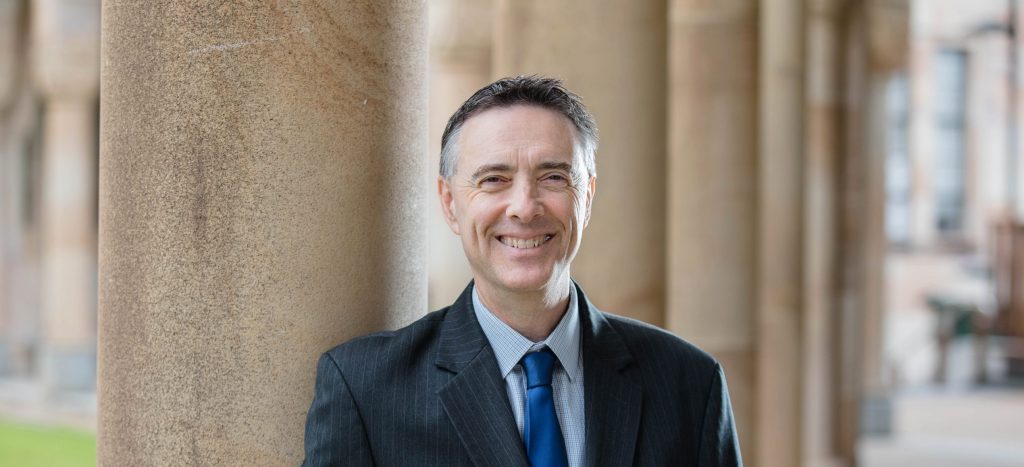
The Australian National Fabrication Facility is delighted to announce Chris Gourlay as its new Chief Operating Officer (COO), commencing 7 March 2022.
Chris comes to us with over 30 years’ worth of experience working with industry, government and universities in Australia and overseas. His career has spanned a range of application areas in a variety of capacities – highlights include working in the transport industry as the Research Director of the CRC for Rail Innovation; and consulting on test facility engineering projects for the UK Department of Defence and the aerospace industry. More recently, as the Director of Consulting and Research Expertise (CoRE) at the University of Queensland, he’s been involved in managing consultancy contracts between the University and industry clients.
As COO, Chris will play a vital role in enabling ANFF to translate Australian R&D into impactful outcomes. He will be working with each of ANFF’s 21 teams across the country to ensure consistent and cohesive service offering to clients, as well as ensuring the network delivers on its reporting requirements, and managing the outreach and communications of the network.
On Chris’s appointment, ANFF CEO Dr Jane Fitzpatrick said: ‘We are delighted to have someone with Chris’s experience joining the team at ANFF. His support and enthusiasm for the goals of ANFF will be key in ensuring our success, and his range of experience makes him a fantastic match to the diverse world of ANFF.”
Chris said: “I am very excited to be working with the team at ANFF to help engineers, researchers, university partners and the CSIRO achieve success in their endeavours and to progress the exciting field of nanotechnology for the benefit of Australia.”
Get in touch with Chris via his Linkedin page, or by emailing him at chris.gourlay@anff.org.au.
Building a silicon quantum computer chip atom by atom
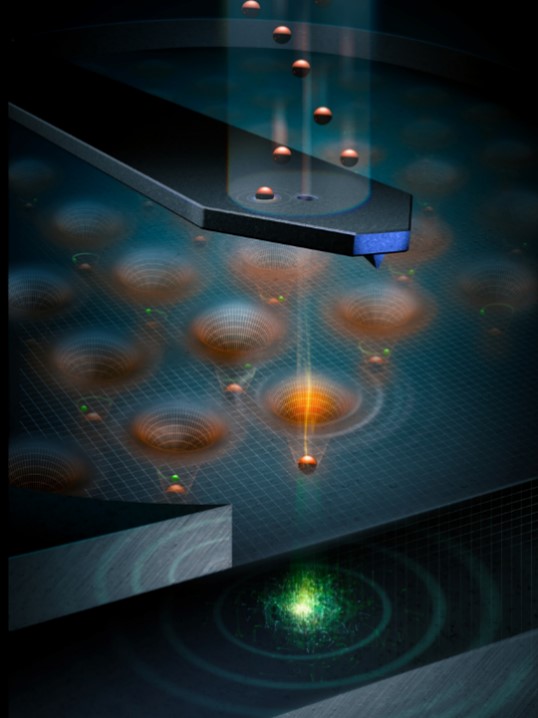
A University of Melbourne led team has perfected a technique for embedding single atoms in a silicon wafer one-by-one. Their technology offers the potential to make quantum computers using the same methods that have given us cheap and reliable conventional devices containing billions of transistors.
Until now, implanting atoms in silicon has been a haphazard process. A silicon chip gets showered with phosphorus which implant in a random pattern, like raindrops on a window.
However, this new research – published in Advanced Materials and assisted by ANFF-VIC and ANFF-NSW – demonstrates a far more predictable and repeatable method. “We embedded phosphorus ions, precisely counting each one, in a silicon substrate creating a qubit “chip”, which can then be used in lab experiments to test designs for large scale devices,” lead author Professor David Jamieson of The University of Melbourne explained.
The team drilled a tiny hole in an AFM cantilever, so that when it was showered with phosphorus atoms one would occasionally drop through the hole and embed in the silicon substrate.
The key, however, was knowing precisely when one atom – and no more than one – had become embedded in the substrate. Then the cantilever could move to the next precise position on the array.
The team discovered that the kinetic energy of the atom as it ploughs into the silicon crystal and dissipates its energy by friction can be exploited to make a tiny electronic ‘click’.
Read more about the approach on the University of Melbourne website.
Neo-Bionica Technology Voucher Program
This is a funding opportunity to develop new medical device concepts through the inaugural Neo-Bionica Technology Voucher Program.
The aim of the program is to support medical device innovators to take concepts to the next stage of development with the support of Neo-Bionica.
Researchers and clinicians with a medical device idea are invited to apply for a funding voucher to cover the cost of Neo-Bionica’s expertise and facilities.
The expression of interest phase is open until 1 November 2021. Following an assessment of feasibility and eligibility, those with suitable projects will be invited to apply for a voucher before 1 December 2021.