Nanofabulous Seminar: Palladium Based Microactuators for NextGeneration Microrobotics
The field of microrobotics has seen significant development over the last decade, with the potential to revolutionize medicine, materials science, and microfluidics. By making use of the chemical and physical properties of different materials, microscale actuators today can respond to various chemical, thermal, magnetic, and electrical stimuli, making them versatile to various applications.
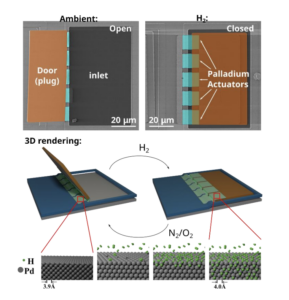
In this talk, I will give an overview of microactuators by our collaborators and focus on a new microscopic palladium-based system that convert chemical fuel into mechanical work (i.e., micro-chemomechanical systems (MCMSs)).
This system uses hydrogen gas as fuel and the α to β phase transformation of palladium hydride to drive microactuation. The microactuators, fabricated as 40 nanometer-thick palladium/titanium bimorphs, exhibit reversible changes of curvature of 0.7 inverse micrometers at room temperature, changes that are orders of magnitude superior to previous systems that utilize phase transformations to drive actuation. However, initial experiments in hydrogen and nitrogen show slow actuation response times at ~100s. To mediate this problem, we turned to density functional theory calculations and found that the addition of oxygen would lower energy barriers to the actuation, which we then confirmed experimentally and showed that the same actuators can respond an order of magnitude faster.
Our findings provide general, atomic-scale design principles for MCMSs with rapid dynamics, enabling development of active three-dimensional structures by chemically triggered folding of two-dimensional photolithographically printed devices for applications in circuit blocks, antennae, metamaterials, and microrobotics.
Dr Hanyu Alice Zhang
Department of Applied Physics
Cornell University, USA.
11:00am, 25/02/2026
Melbourne Centre for Nanofabrication
151 Wellington Road, Clayton, 3168
Zoom link: click here
Meeting ID: 882 7655 2058 and passcode: 663157
Click here for more information
Nanofabulous Seminar: Multiscale biofabrication for sustainability and ‘engineering’ biology
The impact of technology on the life science and biomedical field has been truly remarkable. Whilst these innovations have direct health and economic benefits in the near and intermediate terms, current life science discovery and medical research development could be resource and carbon intensive, which might not be sustainable in the long term. This presentation will illustrate my group’s research work on three themes (i) organ-on-a-chip, organoid, tumoroid bioassembly; (ii) 3D printing of soft and biological materials; and (iii) fibre biofabrication for wearable sensors and bioelectronics. I will also discuss an outlook on how multiscale biofabrication can be harnessed to broaden the impacts of system ‘engineering biology’ – through creating more complex in vitro models, and to make sustainable e-textile or imperceptible bioelectronic interfaces for living systems.
Prof Shery Huang
Professor of Bioengineering, Department of Engineering
co-Director of EPSRC CDT Sensor Technology, University of Cambridge
11:00am, 06/02/2026
Melbourne Centre for Nanofabrication
151 Wellington Road, Clayton, 3168
Click here for more information
4th DWL Workshop
Registration open for: DWL Workshop and Webinar Series
The 4th DWL Workshop, proudly sponsored by ANFF, will be held on Monday February 2, 2026, at the University of Sydney. Join researchers, scientists, and micro/nanofabrication experts for this one-day event exploring the latest in direct write lithography (DWL) including electron, photon, ion beam and more! Educational webinars will also begin in November 2025.
Click here to register and for more information
Want to present at the workshop?
We’re calling on researchers, scientists, and experts in micro and nanofabrication to share their insights at the “Innovative Research in Direct Write Lithography Workshop.” If you’re working on new techniques, applications, or advancements in direct write lithography, we want to hear from you. For details on how to submit your abstract, click here.
* Please be aware that the webinar you’ll be watching is a pre-recorded session. After the presentation, there will be a live Q&A segment.
Keynote speaker at the 4th DWL Workshop:
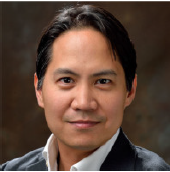
Gerald G. Lopez, Ph.D. Director of Operations and Business & Center Associate Director Singh Center for Nanotechnology
University of Pennsylvania | MAEBL Co-Founder and Board Chair | EIPBN Operations Trustee